


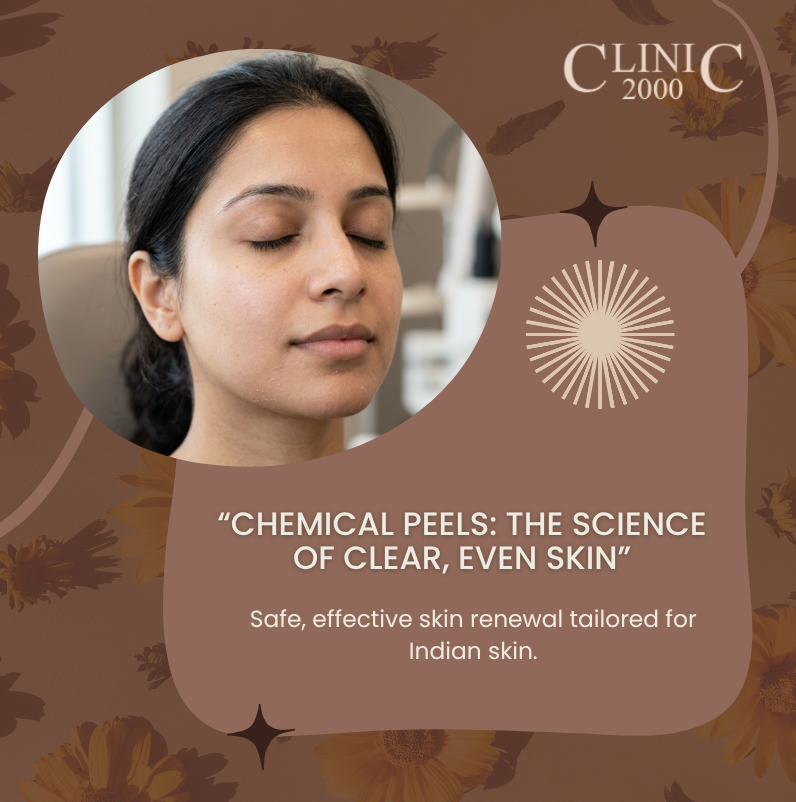
Chemical peels are one of the most versatile and effective treatments in modern dermatology and they have been used safely for decades to treat a wide range of skin concerns. Yet they are also one of the most misunderstood. Many people are apprehensive about them, unsure what they involve, or worried that they are not safe for darker Indian skin tones.
In this comprehensive guide, we demystify chemical peels: what they are, how they work, which types exist, what they treat, and most importantly, how they can be safely and effectively used for Indian skin, which has its own characteristics, vulnerabilities, and treatment needs.
What Is a Chemical Peel?
A chemical peel is a skin resurfacing procedure in which a chemical solution is applied to the skin to exfoliate and remove damaged outer layers. As the old skin peels away, new skin grows in its place, typically smoother, brighter, more even in tone, and with improved texture.
The mechanism is controlled exfoliation. The chemical solution dissolves the bonds between dead skin cells and stimulates cell renewal and, depending on the depth of the peel, collagen production in the dermis. The result is skin that looks and feels genuinely renewed not just surface-polished.
Why Indian Skin Needs Special Consideration
Indian and South Asian skin sits in the medium to dark range on the Fitzpatrick scale (typically Type III to Type V). This brings specific characteristics that affect how chemical peels should be chosen and applied:
• Higher melanin content means a greater risk of post-inflammatory hyperpigmentation (PIH) if the peel is too strong or applied incorrectly
• Medium to dark skin tones are more prone to uneven pigmentation responses to injury or inflammation
• Oily or combination skin, common across South India requires peels that control sebum and target congestion
• Humid climate in Hyderabad means the skin barrier needs extra attention during post-peel recovery
This does not mean chemical peels are unsafe for Indian skin, quite the opposite. When chosen and applied correctly, they are extremely safe and highly effective. The key is using formulations designed for medium to dark skin tones, at appropriate strengths, by trained professionals.
Types of Chemical Peels
Superficial Peels
Superficial peels use mild acids, typically glycolic acid, lactic acid, mandelic acid, or salicylic acid to exfoliate the outermost layer of skin (the stratum corneum and upper epidermis). They are the safest option for Indian skin, with minimal risk of PIH, no significant downtime, and suitability for first-time peel patients.
They are effective for mild pigmentation, surface dullness, mild acne, and overall skin brightening. A series of superficial peels over 4 to 6 sessions produces progressive and cumulative improvement.
Medium-Depth Peels
Medium-depth peels penetrate into the deeper epidermis and upper dermis, producing more significant exfoliation and collagen stimulation. They are used for moderate pigmentation, acne scarring, uneven skin texture, and sun damage.
At Clinic 2000, our Super Peel and C2K Peel are medium-depth peels specifically formulated and tested for Indian skin tones. They deliver meaningful clinical results while maintaining a strong safety profile for medium to dark complexions.
Deep Peels
Deep peels, typically using phenol, penetrate to the mid-dermis and produce dramatic resurfacing results. However, they carry significant risks for patients with medium to dark skin tones, including prolonged downtime and a high risk of pigmentation changes. They are rarely appropriate for Indian skin and are not commonly offered at skin clinics in India.
What Can Chemical Peels Treat?
• Pigmentation and melasma – peels progressively lighten hyperpigmented areas and even skin tone
• Sun tan and UV damage – peels remove surface and mid-level UV pigmentation effectively
• Acne and acne-prone skin – salicylic acid and combination peels reduce active acne and prevent new breakouts by unclogging pores
• Post-acne marks and PIH – peels accelerate the fading of dark spots left by healed acne
• Dull and tired-looking skin – even a single superficial peel significantly improves radiance and skin luminosity
• Open pores – regular peels reduce pore visibility by clearing blockages and stimulating collagen around pore walls
• Mild to moderate wrinkles and fine lines – medium-depth peels stimulate collagen and improve skin texture
• Uneven skin tone and texture – peels remove dead cells and promote growth of fresh, even-toned skin
What to Expect From a Chemical Peel at Clinic 2000
Consultation and Skin Assessment
Before any peel, our dermatologist conducts a full skin assessment to determine your skin type, identify existing pigmentation or sensitivity, and assess any contraindications. We select the peel type and strength based on this assessment not on a one-size-fits-all basis.
Preparation
For medium-depth peels, we recommend a 2 to 4 week skin preparation period using prescription or medical-grade topical agents to prepare the skin, reduce pigmentation risk, and maximise peel efficacy.
The Peel Session
The peel solution is applied to clean skin using a brush or gauze and left for a precisely timed period before neutralisation and removal. You may feel a mild tingling or warmth, this is completely normal and expected. Sessions typically take 20 to 40 minutes.
Post-Peel Recovery
Depending on the peel depth, you may experience mild redness and slight flaking over 3 to 7 days. Superficial peels typically have minimal visible peeling. Sun protection is mandatory during the post-peel period. Our team provides complete aftercare instructions and a post-peel skincare kit.
How Many Sessions Will You Need?
Most skin concerns require a series of peels rather than a single session. Here is a general guide:
• Surface dullness and mild uneven tone: 3 to 4 superficial peel sessions
• Tan removal and mild pigmentation: 4 to 6 sessions
• Acne and post-acne marks: 6 to 8 sessions with appropriate intervals
• Melasma: ongoing maintenance series, combined with laser and topical treatment
The Clinic 2000 Peel Advantage
At Clinic 2000, chemical peels are not off-the-shelf treatments. Our Super Peel and C2K Peel formulations have been refined and tested specifically for Indian skin over decades of clinical practice. They are applied by trained clinicians under the supervision of Dr. Ravindranath Reddy and use only ingredients and concentrations validated for safety and efficacy in medium to dark skin tones.
We combine our peel programmes with complementary treatments including HydraFacial, microdermabrasion, or laser, where appropriate, to deliver comprehensive skin renewal and address multiple concerns in a single treatment plan.
Conclusion
Chemical peels are one of the most evidence-backed, versatile, and effective tools in dermatology. For Indian skin in particular, a correctly chosen and professionally administered peel series can transform skin tone, texture, pigmentation, and radiance in a way that no topical product can match.
If you have been curious about chemical peels but are not sure where to start, book a consultation at Clinic 2000. Our dermatologist will assess your skin, recommend the right peel type, and design a programme that delivers real, visible, lasting results.
Frequently Asked Questions
Q: Are chemical peels safe for dark skin? Yes, when the right peel type and strength is chosen for your skin tone. At Clinic 2000, our peels are specifically formulated and calibrated for Indian skin tones, making them safe and highly effective.
Q: Do chemical peels hurt? You may feel mild tingling, warmth, or a slight stinging sensation during the peel. This is temporary and resolves shortly after neutralisation. Topical anaesthesia is not typically required for superficial to medium peels.
Q: Can I wear makeup after a chemical peel? We recommend avoiding makeup for at least 24 to 48 hours after a peel to allow the skin to breathe and recover. After this period, mineral-based makeup is generally acceptable.
Q: Can I combine chemical peels with other treatments? Yes, peels are frequently combined with HydraFacial, microdermabrasion, microneedling, or laser for comprehensive results. Our team designs combination protocols based on your specific skin goals.
Q: How often can I get a chemical peel? Superficial peels can be done every 2 to 4 weeks. Medium-depth peels are spaced 4 to 6 weeks apart. Our dermatologist will advise the appropriate schedule for your skin and treatment goals.