


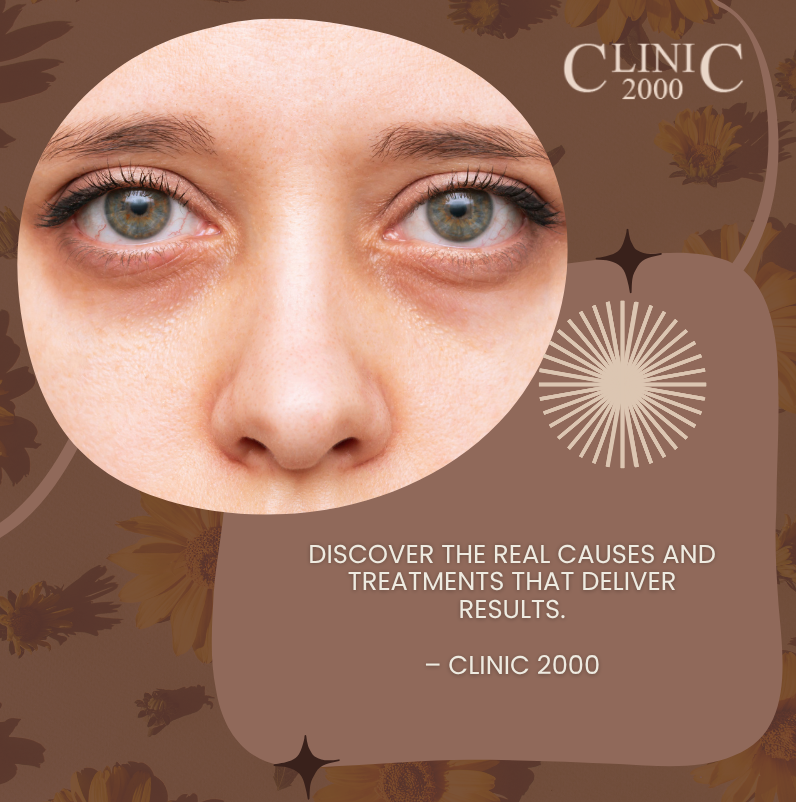
Dark circles are one of the most universally complained-about cosmetic concerns. They make you look tired even when you are fully rested. They make you look older than you are. And despite months of under-eye creams, cooling gels, and cucumber home remedies, they simply do not go away.
The frustrating truth is that most dark circle treatments sold in pharmacies or promoted online treat the symptom, not the cause. There are actually multiple distinct causes of dark circles, and each requires a completely different approach to treat effectively.
In this guide, we break down the four main types of dark circles, explain what causes each, and describe the clinical treatments that produce real, lasting results.
The Four Types of Dark Circles
1. Pigmented Dark Circles
Pigmented dark circles are the most common type in South Asian skin, including Indian skin. They appear brownish or grey and are caused by excess melanin deposition around the under-eye area. This type is often genetic but can be worsened by UV exposure, rubbing the eyes, and hormonal fluctuations.
Over-the-counter creams containing vitamin C or niacinamide may provide mild improvement, but the melanin is often too deep in the dermis for topical agents to reach effectively. Clinical peels and laser treatments specifically targeting pigmentation produce far superior results.
2. Vascular (Bluish-Purple) Dark Circles
Vascular dark circles appear as bluish or purple tinting beneath the eyes. This is caused by the visibility of blood vessels through the thin under-eye skin. As skin thins with age or due to dehydration and fatigue, these vessels become more visible. Iron deficiency and poor circulation can worsen this type.
Sleep, hydration, and addressing nutritional deficiencies can improve mild cases. For persistent vascular dark circles, specific laser wavelengths that target blood vessels and collagen-boosting treatments to thicken the under-eye skin are the most effective options.
3. Structural (Hollow) Dark Circles
Structural dark circles are caused by loss of volume in the under-eye area, creating a hollow or concave appearance that casts a shadow. This is a structural issue, not a pigment issue, and no amount of brightening cream will fix it. As we age, fat pads beneath the eyes diminish and cheek volume drops, making the under-eye hollow deeper.
The most effective treatment for this type is volume restoration, either through injectable hyaluronic acid fillers (tear trough filler) or collagen-stimulating treatments. PRP therapy is also used to improve the quality and thickness of under-eye skin.
4. Puffy Eyes and Eye Bags
Eye bags are caused by fluid retention or prolapse of the orbital fat pads beneath the lower eyelid. They appear as swelling or puffiness under the eye, often accompanied by darkness from the shadow they cast. Morning puffiness that resolves during the day is usually fluid-related. Persistent puffiness is structural.
Drainage therapy, lifestyle modifications, and in persistent cases, minor procedures to reduce fat herniation can address this type.
Why Most Creams Don’t Work
The skincare market is saturated with under-eye products making remarkable claims. Most contain caffeine, retinol, vitamin K, or peptides. While these ingredients have scientific support in theory, the problem is delivery. Under-eye skin is extremely thin and delicate, and the concentration in over-the-counter formulations is rarely sufficient to penetrate to the depth where the melanin or vascular issue exists.
Additionally, most products are formulated for one type of dark circle when yours may be a combination of two or three. Without knowing which type or combination of types you have, you cannot select the right treatment.
Clinical Treatments That Work
Under-Eye Laser Toning
Q-switched laser or Nd:YAG laser toning is highly effective for pigmented dark circles. The laser emits a wavelength specifically absorbed by melanin, breaking down excess pigment without damaging the surrounding skin. Multiple sessions spaced three to four weeks apart produce progressive lightening of the under-eye area.
Chemical Peels for the Under-Eye Area
Gentle, low-concentration peels formulated for the periorbital area can exfoliate the darkened epidermal layer and stimulate cell renewal. At Clinic 2000, we use peels specifically formulated for Indian skin tones to minimize the risk of post-inflammatory hyperpigmentation.
PRP (Platelet-Rich Plasma) Therapy
PRP is an increasingly popular treatment for under-eye rejuvenation. Plasma derived from your own blood is injected or micro-needled into the under-eye area. The growth factors in PRP stimulate collagen production, thicken the skin, improve circulation, and reduce the visibility of blood vessels, making it effective for both vascular and structural dark circles.
Microneedling
Microneedling creates controlled micro-injuries in the skin that stimulate collagen and elastin production. Over multiple sessions, the under-eye skin thickens and firms, reducing the visibility of vessels and the shadow caused by hollowness. It is often combined with topical vitamin C or hyaluronic acid for enhanced results.
Topical Prescription Agents
For pigmented dark circles, prescription-grade topical agents containing kojic acid, arbutin, tranexamic acid, or low-strength retinoids may be prescribed to use alongside in-clinic procedures. These are more potent than OTC products and should only be used under medical supervision, particularly around the delicate under-eye area.
How Clinic 2000 Diagnoses and Treats Dark Circles
At Clinic 2000, we begin every dark circle treatment with a thorough assessment to determine the specific type or combination of types causing your concern. This is not always straightforward, as many patients have mixed presentations, and the wrong treatment for the wrong type can produce no results or even worsen the appearance.
Our dermatologist will assess the colour, texture, volume, and vessel visibility in your under-eye area, review your medical history for relevant factors such as anaemia or thyroid issues, and recommend a targeted treatment plan. We use only FDA and CE approved technologies and clinically validated treatment protocols.
Lifestyle Factors That Worsen Dark Circles
• Chronic sleep deprivation increases fluid retention and reduces skin regeneration
• Excessive screen time strains the periorbital area and increases rubbing
• Iron deficiency anaemia impairs circulation and oxygenation of under-eye tissue
• Smoking damages collagen, thins skin, and impairs circulation
• UV exposure worsens pigmented dark circles and accelerates skin thinning
• Alcohol causes dehydration and fluid redistribution, worsening puffiness
Conclusion
Dark circles have multiple causes, and treating them effectively requires knowing which type you are dealing with. Topical creams rarely solve the problem alone, particularly for pigmented or structural dark circles that require clinical intervention.
At Clinic 2000, our specialist team in Hyderabad has been treating under-eye concerns for over 28 years using evidence-based clinical approaches. If you are tired of looking tired and want real, lasting improvement, book a consultation with us today.
Frequently Asked Questions
Q: Can dark circles be permanently removed?
Pigmented dark circles can be significantly reduced with laser and chemical peel treatments. Structural dark circles may require ongoing maintenance. With the right approach, most patients achieve dramatic, long-lasting improvement.
Q: Is under-eye laser treatment safe?
Yes, when performed with the correct laser and settings by a trained dermatologist. At Clinic 2000, we use FDA-cleared lasers specifically calibrated for the delicate periorbital area.
Q: How many sessions are needed?
Most patients require four to six sessions depending on the severity and type of dark circles. Improvement is noticeable from the second or third session.
Q: Is PRP effective for dark circles?
PRP is particularly effective for structural dark circles and vascular dark circles. It improves under-eye skin thickness, reduces vessel visibility, and adds subtle volume. Results develop gradually over two to three months.
Q: Are dark circles genetic?
Genetics play a significant role in pigmented and structural dark circles. If your parents have dark circles, you are more likely to develop them. However, clinical treatments can substantially reduce their appearance regardless of genetic predisposition.